30 May 2006

The cure


Cure for what ails you.

I made a mid-spring resolution to start cooking for myself more often. The arrival of an colleague from Italia has helped that goal drastically. He even taught me how to make a big mess in my kitchen, as pictured below:


der paster in der pan goin flipper flipper!

I discovered that one of the following is a cure for canker sores (inside of the mouth):
  • Fresh cooked pasta with broccoli and extra virgin oil
  • Spending all day at home cooking and eating (and jogging)
  • Fresh veggies


All Carrots Look Alike

I also happened upon a new mystery: Why do all carrots in Japan look like this one? Huge, triangular, and without skin.. It's bizzare. I just can't find a normal carrot. But the good thing is that mutant clone carrots are fairly cheap--by far the cheapest ingredient in the $5 salad pictured above!

23 May 2006

umbrella condom +alpha

Umbrella Condom: n. a plastic cover that fits over an umbrella, as to protect the inside of a building from drippy bits.

Umbrella condom dispensers are often located near the entry of buildings and moved to a place of prominence by the building staff whenever it's raining. Next to the free "kasa condoms" is the obligatory "kasa condom rubbish bin."


+alpha: adj. [Japanese marketing] a standalone suffix that designates "more than you normally expect."

Why alpha? No-one knows. But the dispenser at my conference's building has a previously unknown feature: it dispenses condoms with a blow. Air is blown to keep the condom open, facilitating easy insertion of one's umbrella, which can often be clingy and adhesive when wet.


No idea if these HDPE condoms are recycled, how I feel about the idea of a recycled condom of any sort, and how much electricity is required to continually blow condoms. But since this is the first time I've seen the condom blow, I'm guessing it is only associated with government positions. (This is a government/community building in addition to convention center.) Non-inflated dispensers are much more common, and cheaper I'm guessing.

PS Apologies if some feel this blog humor has risen to untenable levels of sophistication. We will return to normal broadcasting shortly.

19 May 2006

a nice photo shoot

Thought you may enjoy this photoshoot link I found. I'm going to go have my blood boiled at the roughness festival now.

18 May 2006

Oh, lovely Engrish


I was invited to a festival. From the website, does it sound nice to you? Here's a quote:

The Sanja Matsuri counted by one 
of the Edo three major festivals boils
Asakusa people's bloods as a roughness
festival of the Edo the greatest, and
gathers one million tourists or more
now every year.

The emotion of the downtown and shouldering
person's heat pile up the atmosphere of
the festival, the foreigner also participates
in portable shrine Cats at the same time
as being known to the Japanese whole country
as Hana in Edo recently, and it is popular
as a global festival.

17 May 2006


This is the scene.

I wish this had a smell-a-vision, or some way to guage the smell of this photo. It smelled like caked urine and sweat. The man's white pants were stained brown, but I think it was mud. (I hope it was mud.)

He must have been in the subway system to avoid the rain--though arguablely, the rain would have done this homeless man good. I'm guessing he'd spend just enough time in each station to avoid having the police called to remove him due to his smell. Yes, he smelled that bad.

Prior to his last-minute decision to board our train, I was sitting in the seat marked in blue. I noticed a 10Y coin on the seat, and I moved it to the side. (Not that I was expecting anyone to care if I took it, but I didn't need it, and it's kind of the Japanese style to not take things if they're not yours.) After the homeless man sat at the place marked by the green circle, I left. I lasted 5 seconds. I wasn't the only one who left. It was that bad.

The next stop, he left, and the air stirred by his motion gave us all a second wave of the stench. Definately "Ewww.. Grossness." Normally at this point, it'd be time to pity the guy and try and forget his body ordor.

But leaving the train, I thought to go back and see about the 10Y. Zoom in, and look at the red arrow. Amazingly, a man so far down in the dumps that he hadn't showered in at least a month not take the coin. I was amazed.

What do you think? Did he not see it? Was he choosing to smell like a toilette for other reaons? Would he have taken it if it was a 1000Y bill? ..Would I?

09 May 2006


Smell like a C O W

Hair Make ROPE Sometimes there's no need to write anything. Yes, that is a cow on my triple box of soap. (The soap is kind of moist and dense, like cheese or something.) And the Hair Make Rope sign is a beauty salon: Rope, for your Hair and Make(up) needs.

27 April 2006

I like small cars

I was doing pretty good, regular posts, and then.. Elevator-ness for two weeks. Sorry 'bout that.


night-time daihatsu love

I do like small cars. Lots of Mini Coopers here, teeny old classic kind and also the new, and these small Japanese cars.

U-Tokyo Front-Gate Smartness

Smart is a European car maker, and their 2-seater cars are very cute. If I live someplace where highway driving wasn't required, I'd get one. They are safe, but with enough speed I think they'd be little rolling bouncing balls. But at low, city speeds they should be fine. I mainly want one for parking convenience and fuel efficiency.

..Sadly, reducing the world's CO2 emissions is not on that list. Kind of pointless for developed nations to try and reduce emissions, because burning stuff is the cheapest/only viable way for undeveloped nations to stop being undeveloped. It's gonna get burned, one way or another. My reason is this: if you had to choose whether or not to use power to save a sick person, a baby or your grandma or example, even though you know that using said power will slowly put animal/plant species at risk, you're going to pick "person" every time. Anyway..

Small cars. Lots in Tokyo. Me likey.

16 April 2006


Elevator Notice

This is the elevator at my office. Today I noticed a notice.

What does this mean to you?

Thought I'd post this because it's a good example of daily life here in Japan. Actually, it's more accurate to say, "Daily life for those who can't read." If you saw this next to the elevator, what would you do?Obviously the first part is a date. (today) From the limited kanji I know, the next part on the first line I think says "middle of the morning." The rest I can't really read.

This could mean anything from "There will be a fire drill some time, approx the middle of this morning" to "This elevator is a death trap some time in the middle of the morning" to "Hey students if you are coming for the review session come up to 313 from the middle of the morning." Choices A and C seemed harmless enough so I just ignored the sign.

Welcome to illiterate life in Japan!

14 April 2006

This bag of chips is all that and a.. ..uh..


P O T A R I C H

I'm movin on up! Wow these potato chips are amazing!


Makes me feel like an Uptown Man


Super Cool User Diagram!

The bag is plastic, but it looks like solid gold! I really can't eat them. (Well, not just because they're cool--this is a one use type of deal, perfect for beer with your buddies, but I don't have the beer, and I don't have the buddies right this second.) At least I can appreciate this product's aesthetic beauty.

And that little POTATO guy.

12 April 2006

A Sunday in Edo-Era Kawagoe

The following text is from a pamphlet in English, from the Kawagoe City tourist information center, prepared by Barry Duell. (Not me--I just retyped it here because it's a good read.)


Kurazukuri - Clay-Walled Stores

In the past it is said there were more than 200 clay-walled stores in Kawagoe City. Now there remain only about thirty. However the 10 or so facing the main street as it passes through the north part of Kawagoe provide a scene from the past found in few cities in Japan today. To preserve these few remaining "kurazukuri," clay-walled stores, 16 of them were designated Cultural Properties by Kawagoe City in 1982.


One of the oldest clay-walled stores in Kawagoe was built in 1792. Known today as the Ohsawa family dwelling, it was designated an Important Cultural Property by the federal government in 1971 because it represents one of the few such buildings left in Japan from that period.

Clay-walled construction was used both to make a structure fireproof and to make it secure against intruders. Such a method of construction was used in Japan not only to make kurazukuri, but also to make storehouses, examples of which can be seen in and around Kawagoe.


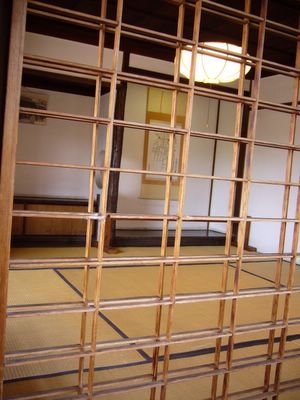


Most of the clay-walled stores left in Kawagoe were built during the Meiji period (1868-1912). It was during that period, in 1893, that a large fire destroyed a major portion of central Kawagoe. The few buildings that survived were of clay-walled construction, including the kurazukuri now called the Ohsawa family dwelling, which encouraged the merchants in the area to rebuild in this style.


The architectural flavor of these shops reflects the style popular in Edo, now [called] Tokyo. In fact, Kawagoe today has the largest concentration of Edo-style kurazukuri remaining in the Kanto area. Many kurazukuri in Tokyo were destroyed during the Great Kanto Earthquake and resulting fire in 1923.

To build a kurazukuri, large stones were first pounded into the ground to form a solid foundation. Upon this was built a heavy frame of wood with bamboo lathing. The walls were made about 20 cm (eight inches) thick using a mixture of clay and fibrous material, and were protected from the weather by an outer layer of plaster. It took two or three years to build a kurazukuri partly because of the time necessary to properly dry the clay walls. The crowning feature of a kurazukuri was the "devil tiles" that were placed on each end of the roof ridge. These, too, were often elaborate. Merchants showed their wealth by building as large and fancy a structure as they could afford.


Most of the Kawagoe merchants that had clay-walled stores sold dry goods or cloth, or dealt in thread and silk cocoons. Other specialty shops sold such items as dyestuffs, "tabi" (Japanese-style socks that fit like mittens on the feet), fertilizer, grain, sugar, "sake" (rice wine) and soy sauce, tobacco, "geta" (wooden clogs), green tea, sweets, lumber, stationery, paper, metal goods, or charcoal.

Kawagoe's Kurazukuri Museum is housed in what used to be a tobacco wholesaler's shop. It was one of the first kurazukuri built after the Great Kawagoe Fire of 1893.


"Toki no kane" Bell Tower

Located near the Kurazukuri Museum is Kawagoe's "Toki no kane" Bell Tower which marks the time four times a day. The bell, now automated, rings at 6 AM, 12 noon, 3 PM, and 6 PM. It is said the bell tower was first built in the mid-seventeenth century by order of the Kawagoe "daimyo" or feudal lord. Located in what was then the center of Kawagoe, it kept the population informed of the time. The tower's bell was also used to warn the population of any fires spotted from atop the tower.

The tower was rebuilt in 1894, the year after the Great Kawagoe Fire of 1893 destroyed the earlier structure.

--prepared by Barry Duell

10 April 2006

Robo BaaBaa


Robo-Barber Secret Mirror

At my recent haircut, I took pictures of my barber's solution to having NO space in his 2-chair establishment. It's very automated and Jetson's like!


Sink Mode + Vibra Action Robo Chair

There's a foot switch at the bottom of the mirror. That activates the wall. The mirror moves over and then the sink folds down.

The seat itself is also amazing--lumbar, recline, shiatsu massage, heat (of course), and even a internal kiddie-booster. The standard "chair go up, chair go down" switch is there too, but unfortunately it just didn't go down enough. Maybe the floor should have "barber go up" switch instead.


Sink Fold-out In Action

My camera's lens just isn't wide enough to catch everything in this small space. The customer leans forward over into the sink for the post-cut wash. Then comes the head & shoulder massage.

What? You don't get a massage at the end of your haircut? Geez, what century did your country learn about haircuts anyway?!? At least there's no blood letting. *whew*

... I asked the barber how much his rig cost, and if I understood correctly, each mirror thing (installed) is about $3000, but each seat is $10,000 (US). Holy moly.

05 April 2006

removing rust?


Rust Ring Emergency!!

Anyone know a good way to remove rust?!?

...Well it's not as bad as getting arrested or breaking your fibia, but it could cost me a BUNCH. (You don't want to know how much money in security deposit I have on my apartment!!) So I qualify it as an emergency.

I don't have anything abrasive enough to get it off. Ideally I'd whip out the ol' 4 inch rotary grinder. (If I had one.) But... if I go too abrasive it'll mar the surface too bad. And it seems like most of the sink has a coating--probably something made of plastic. It'd be nice if I could scrub only where there's rust.

Readers in Japan: is there any product I should know about? All the American products I know are not available here.

..This is the second rust spot to stain something permanent in my apartment. The first was my plastic sink in the shower, from the bottom of a shaving cream can. Yes, Plastic. Plastic got stained by rust. It just grew down into it somehow. The same thing happened here.. standing water does nothing to the sink when it's just water, but when in contact with a Cambell's Chicken Noodle for a day when a guy is sick... Actually, I'm sort of lucky it was just a ring, because those cans have multiple rings now, and there's a sticker for Japan import on the bottom. Anyway.

I'll go buy some fine steel wool and see how that goes. Maybe I can show the above photo to the old man at the nearby hardware store... And as a last desperate resort I might try ammonia, although I happen to know it doesn't have the redox potential to reverse iron oxide.. *gack*

02 April 2006


Tokyo Cat (Zoom in if you can't see it)

..They often have bob tails. Sometimes there's a bit of normal tail ending to blocky bit, as if the tail is folded on itself. A friend told me that when she saw the bones of her cat after cremation (it's a Japanese thing) that she saw the bones doing exactly that! Makes me wonder if it's a genetic thing about Japan housecats, or if westerners tend to straighten out kitten's tails when they're still just kittens when the bones are still flexbile.

30 March 2006

Drinking is Important

Yesterday I attended a farewell party for a graduating PhD student in our group. Now that my Japanese is getting a little bit better, it struck me that for 4 hours, the topic discussed at the table was entirely about other people. Some of the talk was normal scientist stuff: famous groups, famous scientists, and their crazy tendencies. But a lot of it was about group members at the table, and group members away from the table.

Everyone was up front and direct about people they didn't like, and things they did that were annoying. Lots of ridicule and judgmental opinions were aired.  ... This is in stark contrast to day-to-day manners, where everyone but the guy at the top is expected to suffer.

It seems no coincidence that the choice words started flowing after their throats got lubed up by a couple a beers and steady glasses of wine. And in Japan, work parties, where everyone goes together to some bar and gets snookered, is part of the job. Girlfriends/wives do NOT go. It's a work meeting. With drunk guys.

Now I understand why. People must be saving up for these things. I'm sure some people plan in advance what they want to let out. Sure there may be drinks, but not everyone in Japan lacks alcohol dehydrogenase--some guys can drink. The alcohol is just an excuse--for some reason, this is one social setting where it's OK to be completely frank.

It's also interesting that despite the high consumption of alcohol, drunkards in Japan don't fight. I theorize that either A) they drink with people at work, and the group mentality makes a fight WAY too awkward or B) they don't often get personally offended to the point of loosing their temper. ..and I'm trying to compare apples to apples: Tokyoites to Manhattaners. Maybe a person who has less concept of being unique and different has less impetus to get offended. Hmmm...

28 March 2006


Spring time in Tokyo


BEFORE: Cherry trees next to my office's building


AFTER: (Actually, "DURING" or Now is more accurate) Cherry trees next to my office's building


Ueno Park, sunset on Sunday "o-hana-mi" or Flower Viewing


Ueno Koen's sakura in bloom, by lantern light

It's really hard to catch the full feeling of these days in Japan.. Forgive me if I decide to spend more time enjoying it and soaking it in than posting on the blog!!

24 March 2006

Narita 101


Welcome to Narita Airport!

During your lay over at this east Asia hub, there are several ways to spend your free time. Passengers from the Americas (and maybe Europe?) will arrive in Terminal 1, which has a high concentration of Japanese-y gifts from cute "Welcome To Our Store" kitties to kimono and ceramic knives. (And incidentally, this is the only place in Japan I've seen ceramic knives.) Terminal 2, which serves Asian destinations, may also have these stores, but I haven't been there yet so I don't know.


Pica PiCA!

From the 5th floor you can reach the outdoor observation deck, where you can see one cartoon-adorned jumbo jet pass by every 21.3 hours. (No, I don't have any data to back that number up.) There's also Kaiten Sushi, so you don't have to speak Japanese to order, and you can see before you eat. There's a little conveyor belt that brings sushi dishes by your table. But once you touch one of the color-coded-for-price plates you gotta buy it, so I recommend you enjoy the taste before asking what it is.

One word of caution; Narita is Tokyo's biggest airport, but it is also the name of a Tokyo suburb, right there by the airport. (Which, uh.. is, uh.. well, it might have some reason for the name.) So when you're on the train to the airport from Tokyo, be sure and listen/read the English announcements. I've learned that if a Japanese person has taken the time to provide instructions in English, it's usually to help you avoid calamity or fiery death and should be paid close attention to. (...and because I know you're wondering, No, I didn't miss an international flight before.. but I think it might be hard for someone in Japan who didn't know Japanese and English well.)

21 March 2006


Adventures In Breakfast! Today's Test Subject

Would you eat this?

I would.

The brown things are beans called ANKO. Closest description I can come up with is sweet red beans. The cake had a green tint to it--that would be due to a pinch of green tea.

Verdict? Delicious! The cake was soft, moist, and spongy, not unlike yummy carrot cake. Like many Japanese delicacies, the taste wasn't strong: just a hint of sweetness from the anko. And the perfect size for one serving. I would definately buy it again. Grade A

I broke down.


The Bundle of Joy

My What-The-Heck Japanese HD Cable Which Prevents Me From Enjoying My Bundle Of Joy In It's Full Widescreen High Definition Glory But Can And Will Soon Be Remedied Once I Buy The Correct Cable Which Has Component Video Connectors Which Is Better Anyway Because Then I Won't Have To Unplug My DVD Player (XBox Can't Play US Movies) Every Time I Wanna Use It

Only complaint about the XBox console itself is the noise--like the original, it makes a fair bit of fan/disk noise. Solution? Turn up the volume.

19 March 2006

Mom Survived


MOTHER SURVIVES JAPAN

This news flash is to report that my Mother visited Japan and enjoyed it very much. At the end of her visit, I tried to keep track of all her observations about Japan. She noticed a lot of things which just seem normal to me by now.
  • #1 Everyone is exteremely quiet. On the train, in a line, at the store..
  • 80% neat 90% hard (to live here)
  • [a candid observation, 110% honesty style] deceptively friendly, intensely private, "I don't think you could ever really break into this culture, which is probably in Japanese folks's best interests"
  • High tech low tech. For example, a heated bathroom seat next to old fashioned chain and plug sink stopper.
  • Wherever you go no two toilettes are the same. "I can understand your fascination with toilettes now."
  • everything is extremely clean (except for U Tokyo campus, near my building)
  • U Tokyo is not really an international campus. For example, U Tokyo's welcome center is 100% Japanese.
  • "Reverse discrimination" when someone is nice to you at the tourist booth but in their heart hates your guts. Not as bad here as in Mexico, but slightly here. A little bit here.
  • If you're not skinny, you feel a bit freakish, like people look at you
  • Appearance is very important here--seems opposite from the way it is in America. Japan doesn't subscribe to the "don't judge a book by it's cover" motto.
  • Very efficient & very "smart"
  • Seems open to the best things of other cultures, but also holding on to the best things of their own culture. (Lance's idea that she agrees with)
It was a bit cramped in my apartment with the two of us, but I miss her being around. I think I'll go un-rearrange my kitchen now. Come back soon, Momma!

PS Sorry for the delay.. I originally wrote this on the day after she left. (2 days ago.)   Apparently Blogger.com's spam police have itchy trigger fingers, cause I got shot.

10 March 2006

Japan vs. XBox360


This photo taken Jan 22, 2006

For all my guys out there, this astounding photo needs no explanation. Astounding. And ~110Y/$1 means extra astounding.

For those who don't care about video games, here's why the above photo is astounding: the XBox360 is what's called a "next generation" game for home. It's better because it uses sophisticated parts for excellent video (in high definition), it has wireless internet so you can for example race in a car against someone in Germany, and you can play movies on it. In the US and Europe, this machine is sold out; you can't find it in any stores. In fact, it sold out on the first day it was available.

...which has led people to start selling the Japanese versions on Ebay for $450. ..which is isn't so much higher than the $400 price in the US, but is $100 higher than the Japanese price, with the Yen->USD conversion. Why? Isn't this a global economy? How is this possible?

Two reasons. 1) Sony. MicroSoft is making a pre-emptive attack before the release of Sony's next generation game, the PS3. It will hit big in Japan, and it will hit soon. 2) Region locking. US folks could fear that their beloved game won't work, much like the way DVDs are coded for the country you bought them in. Region locking only effects a very small number of people who live in the "wrong" region.. *ahem* like me.

However, I just happened upon this information which describes how many many games are actually not region locked. I am salivating as I type. Perhaps I could file it under "Ways to learn Japanese"..?

08 March 2006

Nice Day Camera

Just had a Japan moment: slipped out of work at 4:30 to take a jog, because today was surprisingly warm. Along the way were the usual school kids, old ladies, and construction workers--but I also noticed a bunch of people wearing cameras. Walking the dog, window shopping, or strolling around with the baby, I saw people taking time out. And 90% of them had a nice, big, black SLR camera. (Canon, mostly.)

I just thought it was quaint that the same people who would take a break to enjoy the weather are also the type who want to capture the moment in a photo. Not that they were actually taking any photos.. but I could relate all the same.

HARMONY English


A sensible, reasonably priced plastic tote


A typical Tokyo girl's sweatshirt.

The English is just there for looks.. so of course Japanese folks wonder why foriegners are always reading it. ... After one or two gems like this one, I read every bit of clothing English I can find!

Slowly, my own collection of clothes with Engrish is growing, but it's hard to find stuff my size. But I have a prized "Massive Ebidence" t-shirt with "Molecules of Chaos" on the front.. hmm.. I should go shopping.

06 March 2006


PLUM BLOSSOMS, Tokyo in early spring

on a nice weekend day, people come out to sketch nature and landmarks

"Ume" (Japanese Plum) can have pink or white blossoms; this is the same flower as the first photo. They bloom much earlier than cherry blossoms, "Sakura," so it's still too cold to have big picnics. That'll happen within weeks, though, I think. The kind of tree that produces edible plums have white blossoms.

03 March 2006

Money


Does that look like $2.46 to you?

Someone asked about money. And soon after, a cautious Japanese friend of mine (who works in a bank) told me that I shouldn't post any pictures because it could be forgery. Well.. if I go to jail over this, I'd be surprised.

The photo above is my old change purse. Yes, a Texan man owns a purse. But you would too, because change is actually valuable here. There are no bills equivalent to $1 here, just a coin that looks like a slightly small quarter, the 100Y coin. (There's two in the photo.) Some coins have holes in the center: 50Y and 5Y. (There's one golden 5Y in the photo.) The other coins are 10Y and 1Y. The 1Y coin is some kind of really light alloy, which reminds me of play money.

Standard practice when you're paying for something is to get your change out and visible before the total is actually presented. Then you pick through the change and put it on a tray. A polite person will double check, spreading out all the change for a final count. The 50Y and the 100Y are the same color and almost the same size--if you miss the hole in the middle it's easy to make a mistake.


BILLS BILLS BILLS

One of the biggest money differences is that cash is much more common than credit cards. Safety isn't really an issue, so there's been no impetus to change. The common bills are 10k, 5k, and 1k Yen. The exchange rate is roughly 100 Y / $1 US, so I have about $60 in my hands. That's not much for Tokyo. (But still enough to induce manic cross-eyed-ness for a self-portrait.) 10kY bills are ~$100, and would have produced genuine mania. 5000Y bills are not dispensed at cash machines, only by hand or at shops. I should mention, there is a 2000Y note, but it's very uncommon and only stocked at banks to dispense by hand.

The print and faces on Japanese currency was recently overhauled. And nice stores like to give out fresh money, as a courtesy to their customers, so there's lots of crispy bills out there. I'll have to get a photo of the pay tray and how a person counts them out when giving you change. (Sort of a folded, snap, count-each-one thing) The bills here are wider than dollars, and the length of them are slightly different for each denomination.